


“Unforgiven” is a 1992 American western drama that has become a cult classic in its genre, earning four Academy Awards and two Golden Globes. The film leaves a lasting impression on even the coldest hearts, as it masterfully explores contempt, fear, violence, and love all at once. Much of this iconic movie was filmed in Alberta. Learn more about the making of this masterpiece on calgary-trend.
The Plot
Set in the year 1880 in the fictional town of Big Whiskey, Wyoming, Unforgiven tells the story of a group of prostitutes, led by Alice, who offer a $1,000 reward for anyone who kills two cowboys responsible for disfiguring Delilah, one of their own.
This reward undermines the local sheriff’s ruling that the offenders should simply provide seven horses to the saloon owner who employed them. Dissatisfied with this decision, the women spread news of the bounty by every means possible.
Meanwhile, William Munny, a former ruthless killer and outlaw, is living out his days on a failing farm with his children, mourning the death of his wife. After more than a decade of living a peaceful life without guns, he is financially desperate.
One day, Munny is visited by an old acquaintance who offers him the chance to earn some money by hunting down the two cowboys. After some hesitation, Munny agrees. He enlists the help of his old friend Ned, and together with a younger accomplice, the trio embarks on a fateful journey.
Where Was It Filmed?
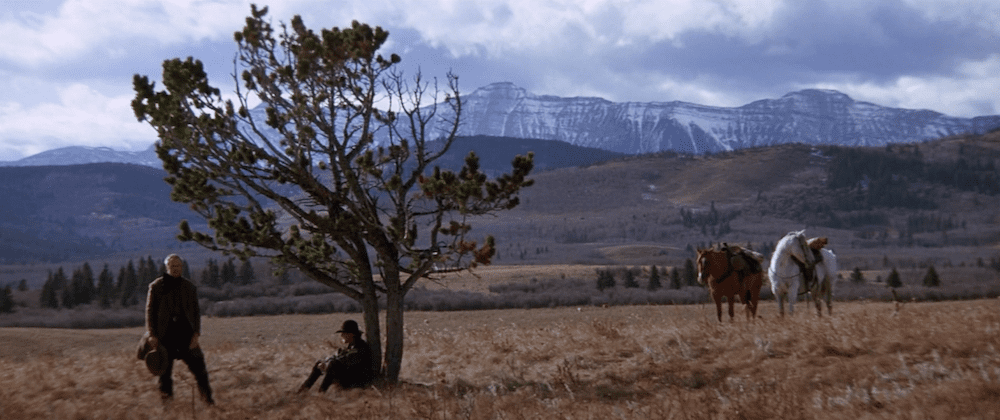
Principal photography for Unforgiven took place in Alberta from August to November 1991. The province was chosen not only for its stunning landscapes, including the Rocky Mountains and sprawling plains, but also because director Clint Eastwood had spent considerable time there prior to the production.
The film showcases various Alberta locations, including Calgary, High River, Drumheller, Brooks, Canmore, Fort Macleod, and Longview. Calgary’s rolling hills and open spaces served as the perfect backdrop for the expansive landscapes of the Old West.
However, shooting in Calgary presented challenges, such as unpredictable weather, sudden temperature changes, and snowstorms that complicated outdoor filming. Navigating the area was also difficult, especially during winter when snow and ice blanketed much of the terrain.
The fictional town of Big Whiskey was built as a set on an open field near Calgary. Set designers created a realistic small-town atmosphere with false storefronts and facades. Unfortunately, many of these filming locations no longer exist. The Big Whiskey set and the saloon were later replaced by residential developments.
A Trip Back in Time
The filmmakers worked hard to capture the essence of the Old West. Real horses and wagons were used to add authenticity, and costumes and makeup were meticulously designed to reflect the era. The sound of horses’ hooves and gunfire was recorded live to enhance the film’s realism.
Fans of Unforgiven can relive the magic of the movie through special events held in Calgary, where screenings and explorations of the filming locations are organized annually.
Clint Eastwood’s Triple Role
Clint Eastwood served as the director, producer, and lead actor in Unforgiven. Known for his roles as “The Man with No Name” in the Dollars Trilogy and as the anti-hero cop Harry Callahan in Dirty Harry, Eastwood became a cultural icon of masculinity.
For Unforgiven, Eastwood was nominated for an Academy Award for Best Actor and won the Oscar for Best Director. The film was both a commercial success and a critical darling, becoming Eastwood’s first movie to gross over $100 million at the box office.
Interesting Facts About the Film
- Inspired by a Political Incident: The script was influenced by the 1991 beating of Rodney King by Los Angeles police officers. Although the officers were acquitted, the event, captured on video, caused widespread outrage. The police chief at the time, Daryl Gates, inspired the character of Sheriff “Little Bill” Daggett.
- Two Decades in the Making: Screenwriter David Webb Peoples, known for Blade Runner, wrote the script in 1976. Although Eastwood received the script that year, he initially shelved it after receiving negative feedback from a colleague. Ten years later, Eastwood revisited the script and decided to bring it to life.
- Casting Changes: While it’s hard to imagine anyone but Eastwood as William Munny, Francis Ford Coppola had initially considered John Malkovich for the role.
- Gene Hackman Had Doubts: Hackman was hesitant to play Sheriff Daggett due to his opposition to glorifying gun violence. Eastwood convinced him to take the role by emphasizing the film’s anti-violence message.
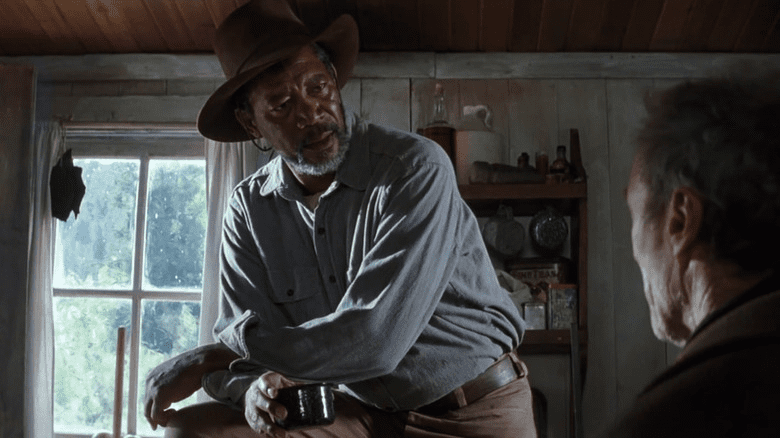
- Morgan Freeman’s Initiative: Freeman, who played Munny’s old friend Ned Logan, learned about the film during the production of Robin Hood: Prince of Thieves. He personally contacted Eastwood to express his interest in the role.
- Original Title: The script underwent several title changes before settling on Unforgiven. Early titles included The Cut-Whore Killings and The William Munny Killings.
- Japanese Adaptation: In 2013, director Lee Sang-il created a Japanese version of Unforgiven set during the Meiji era, with Ken Watanabe playing the lead role of a samurai instead of an outlaw.
Alberta’s Role in the Western Legacy
The dramatic landscapes of Alberta—ranging from the Rocky Mountains to vast open plains—provided an unparalleled setting for Unforgiven. The film remains a timeless classic, both as a reflection of human emotions and a showcase of Alberta’s natural beauty.